
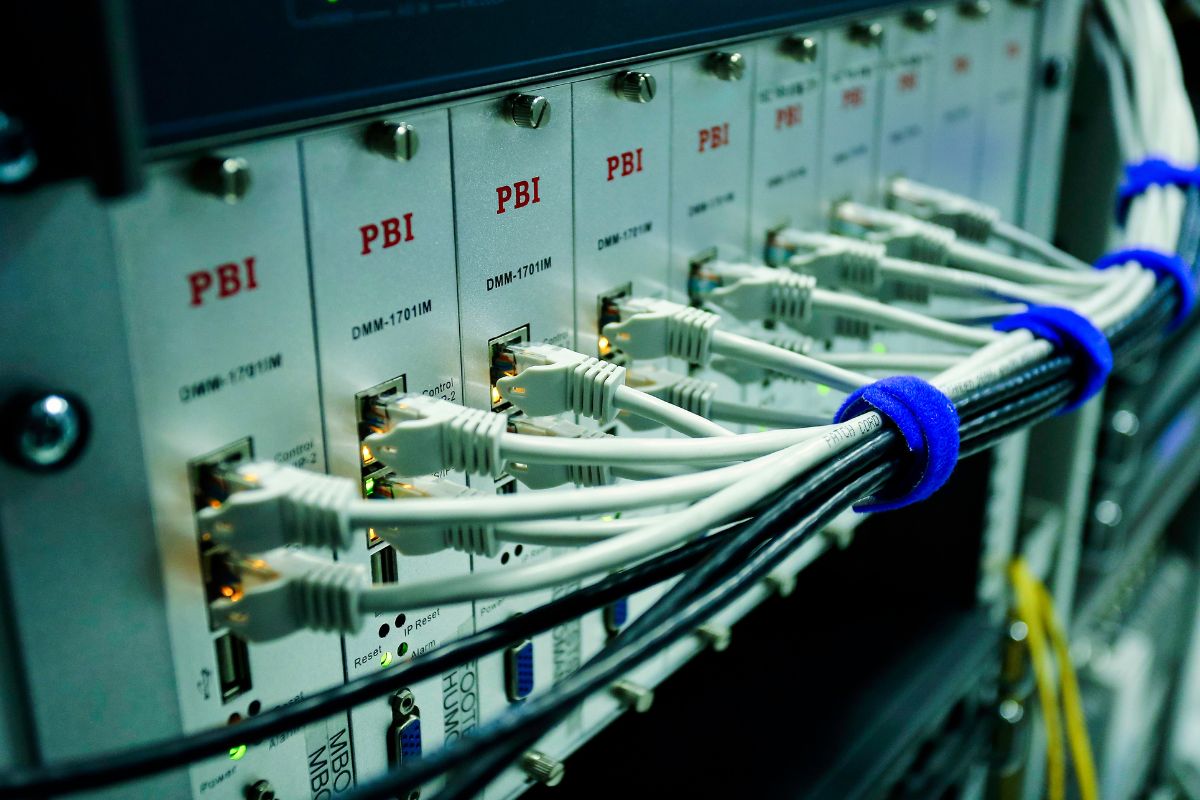
Structured Cabling in Data Centers: In‑Depth Guide
Data centers serve as the beating heart of every business’s IT ecosystem. Whether managing cloud services, processing millions of transactions, or hosting critical applications, the efficiency and reliability of these centers depend heavily on the cabling infrastructure beneath it all. Structured Cabling in Data Centers is a standardized system that organises and connects hardware through a logical and manageable layout, ensuring optimal performance, uptime, and scalability.
Unlike traditional point-to-point wiring that can quickly become chaotic and error-prone, Structured Cabling in Data Centers offers a long-term solution for managing growth, supporting high-speed data transfer, and reducing operational costs. It simplifies troubleshooting, boosts airflow for better cooling, and provides the flexibility to adapt as technology evolves. A well-planned cabling system is not just an IT best practice—it’s a competitive advantage.
Introduction: What is Structured Cabling in Data Centers?
Structured Cabling in Data Centers is the implementation of a meticulously designed, standards-based cabling infrastructure built to support high-performance equipment, rigorous uptime demands, and rapid scalability. It replaces ad‑hoc point-to-point wiring with a hierarchical system consisting of defined subsystems—cable pathways, patch panels, cross-connect zones, and structured networks of copper and fiber. This engineered backbone is critical in mission-critical environments handling massive data flows.
1. The Importance of Structured Cabling in Data Centers
A robust Structured Cabling in Data Centers design yields multifaceted benefits:
- Operational Savings: Streamlined maintenance, fewer errors, and minimal service disruption translate to lower operational expenses.
- Scalability & Flexibility: Easily adapt to hardware upgrades or capacity expansion without major recabling.
- Airflow & Power Efficiency: Organised cables allow optimised airflow, reducing cooling needs and improving equipment longevity.
- Reliability & Compliance: Reduces downtime risk and supports standards-based audits and security compliance.
2. Key Standards for Structured Cabling in Data Centers
Building a compliant system requires adherence to international and regional standards:
- ANSI/TIA‑568‑E – Defines copper cable types, connector wiring (T568A/B), and channel limits like 90 m + patch leads.
- ISO/IEC 11801‑5 – Specifies data center‑grade cabling for fiber and copper, including OMx and Cat8 classifications.
- TIA‑942 / ANSI/TIA‑942‑C – Comprehensive cabling infrastructure guidelines for data centers, including zone design.
- EN 50600‑2‑4 – A European standard emphasizing scalable, fault-tolerant telecom infrastructure at different availability tiers.
- ANSI/BICSI‑002 – Covers design, pathways, bonding, and grounding for full data center cabling ecosystems.
3. Subsystems That Define Structured Cabling in Data Centers
A well-architected Structured Cabling in Data Centers system typically breaks down into these six subsystems:
- Entrance Facility – Where external service providers meet internal infrastructure.
- Main Distribution Area (MDA) – Central cross‑connect hub with core switches.
- Intermediate/Zone Distribution Area (ZDA) – Optional; offloads racks for large buildouts.
- Horizontal Distribution Area (HDA) – Serves rack rows with patch panels and fiber trunks.
- Equipment Distribution Area (EDA) – Rack-level termination to servers or storage.
- Work Area Subsystem – External to the data hall; covers user areas.
Benefit: this segmentation supports cleaner management, resilience, and clear expansion pathways.
4. Choosing Cable Types & Terminations
Selecting cable media hinges on distance needs, bandwidth targets, and cost:
4.1 Copper (Cat6a / Cat8)
- Ideal for short, intra-rack or ToR connections.
- Cat8 supports up to 2 GHz for 25/40 GbE over 30 m.
4.2 Fiber (Multimode OM3/OM4/OM5 / Single‑mode OS1/OS2)
- Preferred for backbone and high-speed inter-rack links.
- OM5 enables multichannel wavelength division for future scaling.
4.3 Pre-Terminated Trunks & MTP/MPO
- Rapid deployment in high-density zones like spine‑leaf switches.
5. Best Practices: Implementing Structured Cabling in Data Centers
5.1 Pathways, Management & Labeling
- Use trays, ladders, baskets—avoid floor contact.
- Maintain bend radii and cable separation to reduce EMI.
- Clearly label cables at both ends and use color-coding to simplify identification.
5.2 Grounding & Bonding
- Bond all metallic trays, panels, and racks per TIA‑607 and EN 50600‑2‑4.
5.3 Testing & Certification
- Verify performance with test tools (copper continuity, fiber OTDR).
- Record all certification details for baseline and audits.
5.4 Documentation & Change Control
- Maintain current diagrams, cable records, and zone layout maps.
- Log every change—device swaps, port moves, additions.
5.5 Airflow & Lifecycle Efficiency
- Keep distribution areas free of congestion.
- Remove unused cables promptly to free space and enhance cooling.
6. Common Pitfalls to Avoid
- Overcrowded pathways – leads to HVAC inefficiencies and cable damage.
- Inconsistent pinouts – mixing T568A/B causes intermittent failures.
- No grounding – makes systems vulnerable to EMI and safety violations.
- Skipping certification – unknown defects can cause downtime.
- Poor labeling/documentation – creates delays and mistakes during maintenance.
7. Future of Structured Cabling in Data Centers
- Higher Bandwidth Media: Cat8, OM5, and parallel optics support next-generation speeds.
- Smart, Sensor‑Enabled Cables: Real-time strain/temperature monitoring through intelligent patches.
- Modular, Pre-Terminated Systems: Enable plug‑and‑play expansion with minimal labor.
- DCIM Integration & Digital Twins: Tighter integration between cabling and management software for predictive maintenance.
8. Deployment Workflow
- Assessment – audit current systems, forecast future capacity.
- Design – define zones, paths, and types of media.
- Procurement – source cables, panels, trays, labels, testers.
- Infrastructure Installation – pathways, grounding, and racks.
- Cable Deployment – run, tamp, label, and secure cables methodically.
- Testing/Certification – test per requirement; document results.
- Documentation – update maps, patch lists, cable IDs.
- Training & Handover – ensure staff understand system and protocols.
- Maintain & Audit – schedule periodic reviews, recertify after changes.
9. ROI & Operational Impact
- Opex Savings: Faster trouble resolution and lower energy/cooling costs.
- Scalability: Infrastructure supports growth without disruptive rework.
- Reliability: Reduces human error and unplanned outages.
- Compliance & Auditability: Tracks everything for audits and accountability.
10. Final Thoughts
Structured Data Cabling isn’t just about tidiness—it’s about building a resilient, scalable, efficient infrastructure tailored for future demands. It bridges the gap between powerful hardware and consistent network performance. Whether you’re standing up a modern greenfield facility or retrofitting legacy halls, implementing best‑in‑class structured cabling is mission-critical.
FAQs
Q1. What’s the lifespan of structured cabling?
A: Typically 10–20 years, depending on category and usage.
Q2. When should I choose fiber vs copper?
A: Fiber for >30 m or >10 Gbps links; copper (Cat6a or 8) for short runs (<30 m) to equipment.
Q3. Should I always use a ZDA?
A: Not in smaller data centers. But zones improve flexibility in large-scale halls with dense rack deployment.
Q4. Cat8 worth it?
A: Yes—ideal for 25/40 GbE over short runs, but backbone still needs fiber for longer spans.
Q5. Can I add smart cabling later?
A: Absolutely—as long as pathways and terminations are in place, additive smart patches work great.