
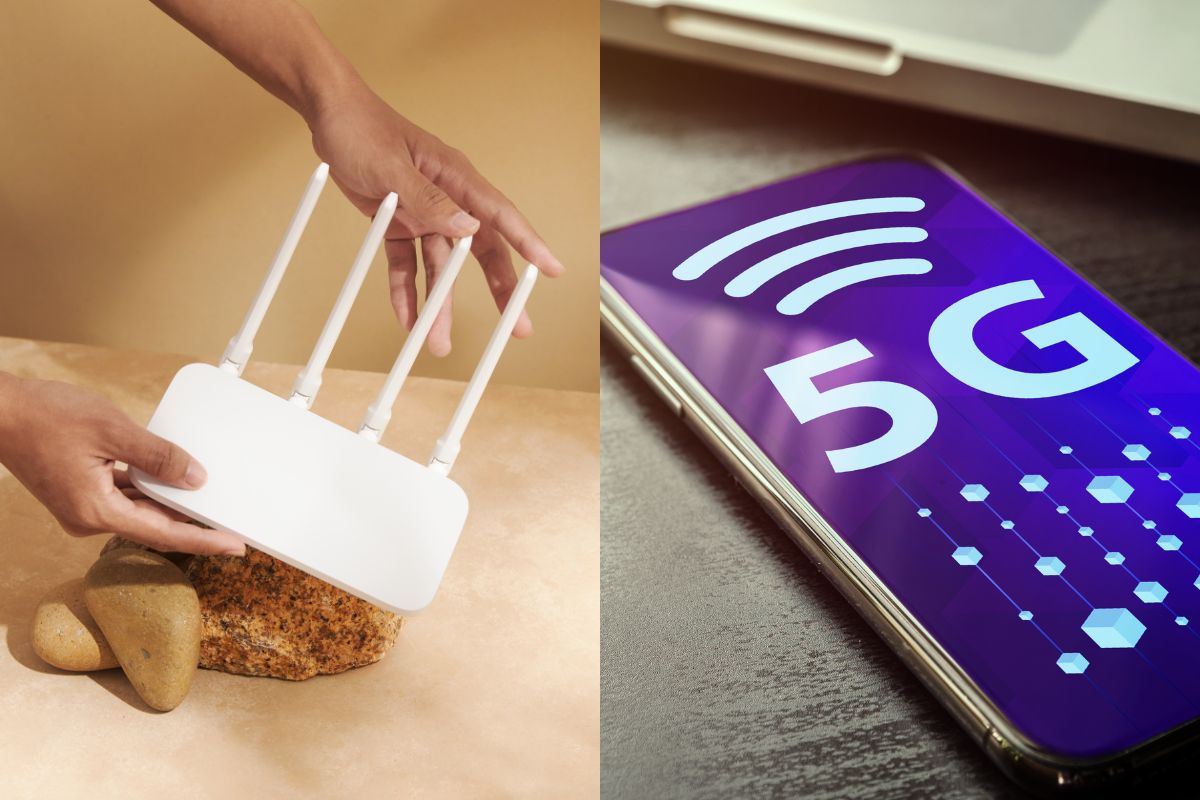
Is NBN Or 5G Better : Breakdown for Everyday Internet User
If you’ve been asking yourself whether to stick with the NBN or make the leap to 5G, you’re not alone and we’re here to finally fix that uncertainty.
This question has been floating around for years, and with both technologies constantly evolving, it’s no wonder people are confused. One promises fibre-backed reliability, the other offers the freedom of ultra-fast wireless. But which is actually better for you?
That’s exactly what we’re here to solve.
In this detailed guide, we’ll break down every angle from speed, reliability, latency, and real-world performance, to installation, pricing, and how they stack up in different everyday scenarios. No fluff, no jargon, just the honest pros and cons you need to make the right call for your home or business.
By the end of this, you won’t be wondering “Which is better?” You’ll know.
Let’s get into it.
What is the NBN?
The National Broadband Network (NBN) is Australia’s government-backed initiative to provide high-speed internet to homes and businesses across the country. Launched in 2009, the NBN was designed to replace the aging copper-based ADSL network with a mix of modern technologies. Officially declared complete in 2020, the NBN continues to undergo upgrades, particularly to transition older connection types to faster, more reliable technologies.
The NBN uses a multi-technology mix (MTM), which includes:
- Fibre to the Premises (FTTP): Fibre-optic cables run directly to your home or business, offering the fastest and most reliable speeds.
- Fibre to the Node (FTTN): Fibre runs to a node in your neighborhood, with existing copper lines connecting to your home.
- Fibre to the Curb (FTTC): Fibre extends closer to your home, with a shorter copper connection to the premises.
- Hybrid Fibre Coaxial (HFC): Uses existing coaxial cables (originally for pay TV) to deliver internet.
- Fixed Wireless: Uses radio signals to connect homes in regional areas to the NBN network.
- Sky Muster Satellite: Provides internet to remote areas via satellite connections.
The NBN offers speed tiers ranging from NBN 12 (12 Mbps) to NBN 1000 (1 Gbps), though the availability of higher tiers depends on your connection type. For example, NBN 250 and NBN 1000 are only available to FTTP and select HFC connections. As of September 2025, NBN Co is rolling out significant speed upgrades, with some plans offering up to five times faster speeds, particularly for FTTP and HFC users. Over 5 million households are eligible for free FTTP upgrades from FTTN or FTTC by the end of 2025, with the remainder able to upgrade by 2030.
What is 5G Home Internet?
5G, or the fifth generation of mobile network technology, is the latest advancement in wireless connectivity, succeeding 4G. It uses mobile towers operated by major telcos like Telstra, Optus, and Vodafone to deliver high-speed internet wirelessly to homes via a 5G-compatible modem. Unlike NBN’s fixed-line infrastructure, 5G relies entirely on radio signals, making it a flexible, plug-and-play solution.
5G home internet comes in two forms:
- 5G Home Broadband: Designed to replace fixed-line connections, restricted to a single address.
- 5G Mobile Broadband: Portable, ideal for on-the-go use, but often comes with data caps.
5G promises ultra-fast speeds (up to 1 Gbps or more in ideal conditions), low latency, and the ability to connect multiple devices simultaneously. However, its performance depends heavily on signal strength, network congestion, and coverage, which is currently limited to urban areas and select regional centers.
Comparing NBN and 5G: Key Factors
To determine whether NBN or 5G is better for you, let’s break down the comparison across critical factors: speed, reliability, coverage, cost, installation, and suitability for specific use cases.
1. Speed
NBN:
- Speed Tiers: NBN offers structured speed tiers, including NBN 12 (12 Mbps), NBN 25 (25 Mbps), NBN 50 (50 Mbps), NBN 100 (100 Mbps), NBN 250 (250 Mbps), and NBN 1000 (1 Gbps).
- Real-World Performance: Speeds vary by connection type. FTTP and HFC can achieve up to 1 Gbps, but FTTN, FTTC, and FTTB may struggle to reach 100 Mbps, especially during peak hours (7–11 PM). For example, NBN 1000 plans typically deliver 600–700 Mbps during peak times.
- Upgrades: From September 2025, NBN Co is boosting speeds for higher-tier plans, making FTTP and HFC connections even more competitive.
5G:
- Theoretical Speeds: 5G can theoretically reach speeds of up to 20 Gbps, but real-world speeds typically range from 100–600 Mbps, with some plans capped at 50 Mbps or 100 Mbps.
- Uncapped Plans: Providers like Telstra advertise typical speeds of 548 Mbps, with peaks up to 878 Mbps in strong coverage areas.
- Variability: 5G speeds fluctuate based on signal strength, network congestion, and distance from the tower. Environmental factors like buildings or weather can also impact performance.
Verdict: In metro areas with strong coverage, 5G often outperforms NBN, especially for FTTN or FTTC connections. However, FTTP-based NBN 1000 plans can match or exceed 5G speeds with greater consistency. For maximum speed, FTTP NBN or uncapped 5G plans are the best options.
2. Reliability
NBN:
- Fixed-Line Stability: FTTP and HFC connections are highly reliable, with minimal impact from weather or signal interference. FTTN, FTTC, and FTTB can suffer from poor internal wiring or network congestion.
- Fixed Wireless and Satellite: These are less reliable, with higher latency and susceptibility to weather conditions.
- ACCC Data: Most fixed-line NBN connections are stable, though performance varies by provider and connection type.
5G:
- Wireless Challenges: 5G reliability depends on signal strength and network congestion. High-frequency 5G signals (e.g., millimeter-wave) have a shorter range and are more susceptible to interference from buildings, trees, or weather.
- Congestion: Telcos like Telstra limit 5G connections in certain areas to prevent congestion, ensuring consistent performance for users.
- Latency: 5G offers low latency (10–40 ms), but this can spike during peak usage. NBN FTTP typically achieves 5–20 ms, making it more stable for latency-sensitive tasks.
Verdict: NBN, particularly FTTP and HFC, is more reliable for consistent performance, especially for large households or businesses. 5G is improving but remains less predictable due to its wireless nature.
3. Coverage
NBN:
- Nationwide Reach: The NBN is available to over 12 million properties, covering urban, regional, and remote areas. Satellite and fixed wireless options ensure connectivity in rural locations where fibre isn’t feasible.
- Upgrades: Over 4 million households can request free FTTP upgrades, with more to follow by 2030.
5G:
- Urban Focus: 5G coverage is concentrated in major cities (Sydney, Melbourne, Brisbane, Perth, Canberra) and select regional centers. Telstra’s 5G network covers 91% of the population, Optus 80.5%, and Vodafone over 2,500 towers, but rural coverage is limited.
- Expansion: By the end of 2025, 5G is expected to reach 95% of Australia’s population, though this focuses on populated areas rather than geographic coverage.
Verdict: NBN is the clear winner for coverage, especially in regional and rural areas. 5G is a viable option in urban centers but isn’t yet a nationwide solution.
4. Cost
NBN:
- Price Range: NBN plans typically cost $60–$100 per month, depending on the speed tier. Entry-level NBN 25 plans start around $60, while NBN 1000 plans can exceed $100.
- Unlimited Data: Most NBN plans offer unlimited data, making them cost-effective for heavy users.
- Promotions: Many providers offer introductory discounts (e.g., $10–$20 off for the first 6 months), but prices increase after the promotional period.
5G:
- Price Range: 5G home internet plans also range from $60–$100 per month. For example, TPG offers a 50 Mbps plan for $39.99/month (first 6 months, then $59.99), while Telstra’s uncapped plan costs $99/month.
- Data Caps: Some 5G plans have data caps (e.g., 200 GB–1 TB), though unlimited plans are available from providers like Optus and Telstra.
- Value: Uncapped 5G plans are often cheaper than NBN 250 or NBN 1000 plans while offering comparable or faster speeds.
Verdict: 5G generally offers better value for speed, especially for uncapped plans. However, NBN’s wider range of speed tiers and unlimited data plans make it more flexible for budget-conscious users.
5. Installation and Setup
NBN:
- Installation Process: NBN setup can take days or weeks, especially for FTTP or HFC connections, which may require a technician visit. FTTN and FTTC setups are simpler but may still need professional assistance.
- Modem: Most NBN providers supply a modem, or you can use your own NBN-compatible device.
5G:
- Plug-and-Play: 5G home internet is quick and easy to set up. You receive a 5G modem, plug it in where the signal is strongest, and connect within minutes, no technician required.
- Portability: 5G modems can be moved to new locations (within coverage areas), making them ideal for renters or frequent movers.
Verdict: 5G wins for ease of setup and portability, while NBN requires more time and effort for installation.
6. Suitability for Specific Use Cases
For Families and Heavy Users:
- NBN: Ideal for households with multiple devices streaming, gaming, or working simultaneously. FTTP and HFC connections offer stable speeds and unlimited data, perfect for heavy usage.
- 5G: Suitable in areas with strong coverage but may struggle with congestion in busy households. Unlimited 5G plans are a good alternative to NBN 250 or 1000.
For Gamers:
- NBN: FTTP and HFC connections provide lower, more consistent latency (5–20 ms), making them better for competitive gaming.
- 5G: Offers low latency (10–40 ms) in strong coverage areas but can be less reliable due to signal fluctuations.
For Remote Workers:
- NBN: Preferred for video calls, cloud storage, and large file transfers due to its reliability and unlimited data.
- 5G: A viable alternative in metro areas with strong coverage, but NBN is safer for consistent performance.
For Rural and Remote Areas:
- NBN: Fixed wireless and satellite options ensure connectivity in areas where 5G isn’t available.
- 5G: Limited to urban and select regional areas, making it unsuitable for most rural users.
For Renters and Mobile Users:
- NBN: Requires installation, which may be impractical for short-term rentals or frequent movers.
- 5G: Highly portable and easy to set up, making it ideal for renters or mobile businesses like pop-up shops.
Verdict: NBN is better for families, gamers, remote workers, and rural users due to its reliability and coverage. 5G excels for renters, mobile users, and those prioritizing speed in urban areas.
Future Outlook: NBN vs. 5G
NBN Upgrades: NBN Co is investing heavily in upgrading FTTN and FTTC connections to FTTP, with over 5 million households eligible by the end of 2025. These upgrades will unlock faster speed tiers (NBN 250 and 1000) for millions, making NBN more competitive with 5G. Additionally, speed boosts planned for September 2025 will enhance performance for high-tier plans, solidifying NBN’s role as Australia’s internet backbone.
5G Expansion: 5G coverage is expanding rapidly, with Telstra aiming for 95% population coverage by the end of 2025. As more towers are built, 5G will become a stronger alternative, particularly in regional centers. However, its high-frequency signals require more infrastructure to achieve the same geographic coverage as 4G or NBN, limiting its rural potential.
Coexistence: Rather than one replacing the other, NBN and 5G are likely to coexist. NBN provides nationwide coverage and reliability, while 5G offers flexibility and speed in urban areas. Some providers, like Telstra, even offer 5G as a backup for NBN services, combining the strengths of both.
Pros and Cons Summary
NBN Pros:
- Nationwide coverage, including rural and remote areas.
- Stable, reliable performance, especially with FTTP and HFC.
- Unlimited data plans across various speed tiers.
- Scalable plans for different budgets and needs.
NBN Cons:
- Installation can be time-consuming and may require a technician.
- Speeds vary by connection type (e.g., FTTN is slower than FTTP).
- Higher-tier plans (NBN 250 and 1000) are expensive and limited to FTTP/HFC.
5G Pros:
- Ultra-fast speeds, often surpassing NBN in metro areas.
- Quick, plug-and-play setup with no technician required.
- Portable, ideal for renters and mobile businesses.
- Competitive pricing, especially for uncapped plans.
5G Cons:
- Limited coverage, primarily in urban areas.
- Speeds and reliability depend on signal strength and congestion.
- Some plans have data caps, which may not suit heavy users.
Making the Right Choice for You (NBN or 5G)
Choosing between NBN and 5G depends on your location, internet needs, and lifestyle. Here are some recommendations:
Choose NBN if:
- You live in a regional or rural area with limited 5G coverage.
- You need reliable, consistent performance for gaming, remote work, or large households.
- You prefer unlimited data plans and a wide range of speed tiers.
- You’re eligible for a free FTTP upgrade, unlocking faster speeds.
Choose 5G if:
- You live in a metro area with strong 5G coverage (check with providers like Telstra, Optus, or Vodafone).
- You value speed and want a cost-effective alternative to NBN 250 or 1000.
- You’re a renter or frequently move and need a portable solution.
- You don’t want to deal with installation delays or technician visits.
To make an informed decision:
- Check Coverage: Use provider websites (e.g., Telstra, Optus, or NBN Co) to confirm NBN connection types and 5G availability at your address.
- Compare Plans: Use comparison tools like Econnex, WhistleOut, or Canstar Blue to find the best deals for your speed and budget needs.
- Consider Usage: Assess your household’s internet demands streaming, gaming, remote work, or casual browsing to choose the right speed tier or plan.
In Sydney, NBN is generally more reliable for consistent high-speed internet, especially with fibre connections, while 5G offers faster setup and good speeds in well-covered areas. If you choose NBN installers in Sydney can handle the setup and cabling often with same-day service making it a hassle-free option for homes and businesses.
Conclusion
There’s no one-size-fits-all answer to whether NBN or 5G is better for Australia. NBN remains the backbone of Australia’s internet infrastructure, offering unmatched coverage and reliability, especially for rural users and large households. Its ongoing upgrades ensure it will remain competitive for years to come. Meanwhile, 5G is a game-changer in urban areas, delivering blazing-fast speeds and unmatched flexibility for renters and mobile users. As 5G coverage expands, it will become an increasingly viable alternative, but it’s unlikely to replace NBN entirely.
Ultimately, your choice depends on your location, budget, and internet needs. By weighing the factors outlined in this guide, speed, reliability, coverage, cost, and setup. You can confidently choose the best internet solution for your home or business in Australia.