Should You Get 50Mbps or 100Mbps Internet?
When deciding on an internet plan, one of the most common choices you’ll encounter is between a 50Mbps (megabits per second) and 100Mbps plan. While both are relatively fast, understanding the differences between these speeds can help you make an informed decision based on your needs.
Whether you’re streaming, gaming, working remotely, or simply browsing the web, the right internet speed can significantly improve your online experience. In this blog, we’ll break down the key factors to consider when choosing between a 50Mbps and a 100Mbps internet plan.
What Do 50Mbps and 100Mbps Mean?
Before diving into the decision-making process, it’s important to understand what 50Mbps and 100Mbps mean. “Mbps” stands for megabits per second, a unit of measurement for data transfer speed. The higher the number, the faster the internet connection. In practical terms, this means:
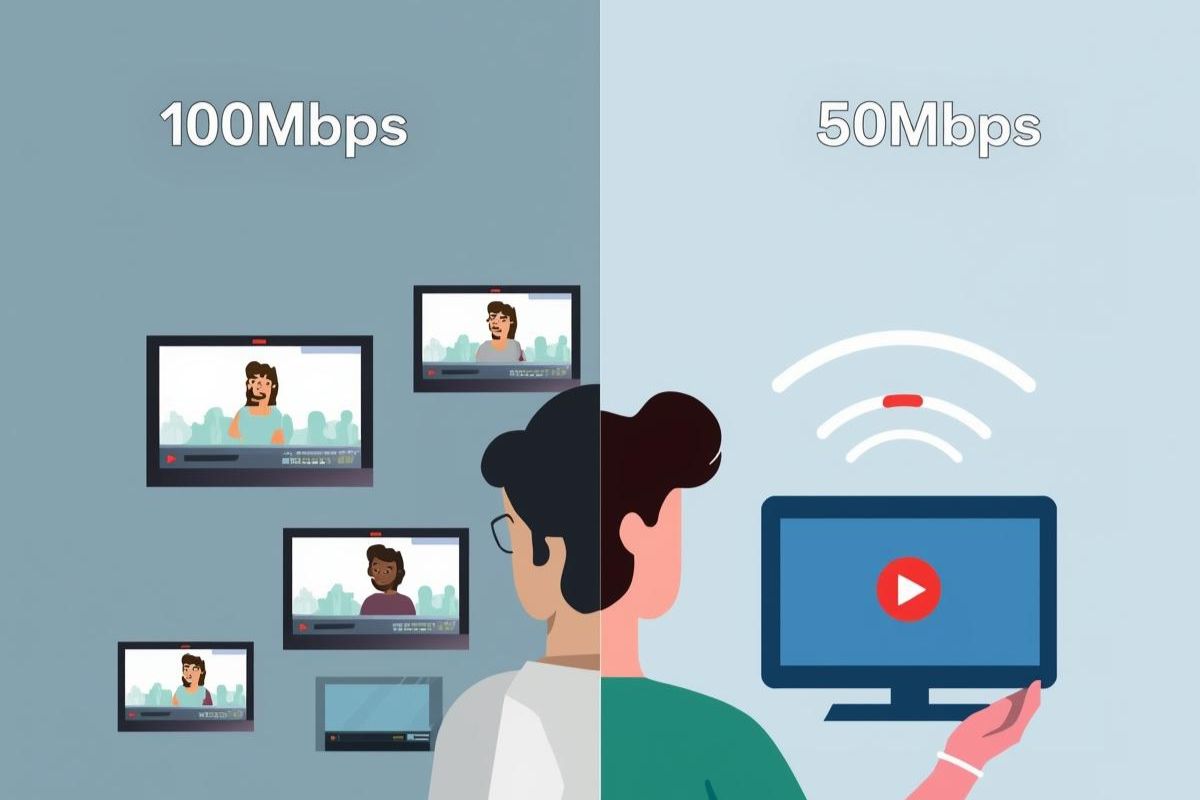
- 50Mbps: This speed is adequate for most households with moderate internet usage.
- 100Mbps: This speed is better suited for multiple users or more demanding online activities, such as streaming in HD, online gaming, or working from home with multiple devices.
The Impact of Speed on Different Activities
Different online activities require varying amounts of bandwidth. Here’s a breakdown of how a 50Mbps vs. 100Mbps plan might impact different activities:
1. Streaming Video
- 50Mbps: Streaming video at 1080p resolution (Full HD) should be smooth with a 50Mbps plan. However, if multiple people are streaming simultaneously, you may experience buffering or reduced video quality.
- 100Mbps: With 100Mbps, you can easily stream in 4K resolution on multiple devices at the same time. This plan ensures you have a buffer against any slowdowns, especially if someone else is downloading or uploading files while you’re streaming.
2. Online Gaming
- 50Mbps: For most online games, a 50Mbps plan is more than enough. Games don’t require much bandwidth, but a faster connection can reduce lag and improve overall performance.
- 100Mbps: If you’re playing competitive multiplayer games or streaming your gameplay on platforms like Twitch, a 100Mbps plan can help ensure stable and fast performance. The extra bandwidth provides more headroom for background downloads or updates without disrupting your gaming experience.
3. Working from Home
- 50Mbps: For basic tasks like video calls, emailing, and document sharing, 50Mbps should suffice. However, if you’re doing video conferencing with multiple participants, uploading large files, or engaging in cloud-based work, the experience could be slower.
- 100Mbps: A 100Mbps plan offers more flexibility for remote work. You can have multiple video calls, upload and download large files, and work with cloud-based applications seamlessly, even when multiple users are sharing the connection.
4. General Browsing and Social Media
- 50Mbps: Casual browsing, social media, and checking email are easy to handle with a 50Mbps connection. Page loads will be quick, and social media apps will function without issues.
- 100Mbps: With 100Mbps, browsing and using social media will be faster and more responsive. If you tend to have many tabs open at once or use multiple devices on your network, a 100Mbps plan will help ensure smoother performance.
5. Downloading and Uploading Files
- 50Mbps: A 50Mbps connection will allow you to download a 1GB file in approximately 3 minutes and 30 seconds. Upload speeds can be slower, depending on your provider.
- 100Mbps: With 100Mbps, you’ll be able to download the same 1GB file in just under two minutes. This extra speed can be beneficial if you need to frequently download or upload large files.
How Many Devices Are You Connecting?
One of the most important factors in deciding between 50Mbps and 100Mbps is the number of devices you’ll be connecting to your network. Each device you connect consumes a portion of your available bandwidth. For example:
- 50Mbps: A household with just one or two users, mostly browsing and streaming, should be fine with 50Mbps. However, once you start adding more devices, like smart TVs, gaming consoles, or other smart home devices, you might notice slower speeds, especially if multiple users are online at once.
- 100Mbps: A 100Mbps plan is better for households with several users or devices. If you have multiple family members working or studying from home, streaming 4K content, or gaming online, the higher speed will accommodate these activities with ease.
Should You Choose 50Mbps or 100Mbps?
When deciding between 50Mbps and 100Mbps, consider these key factors:
1. How Many People Are Using the Internet?
- 50Mbps: Suitable for 1-2 users who are mostly browsing or streaming in standard HD quality.
- 100Mbps: Ideal for larger households or families with multiple users who are streaming, gaming, working from home, and doing other bandwidth-heavy activities simultaneously.
2. What Are You Using the Internet For?
- 50Mbps: Enough for basic activities like web browsing, social media, and streaming in HD.
- 100Mbps: If you plan to stream in 4K, work from home, or engage in online gaming, 100Mbps will provide a more seamless experience, especially if multiple people are using the internet at the same time.
3. Future-Proofing
- 50Mbps: While 50Mbps may meet your needs today, it may start to feel restrictive in the future as more devices connect to your home network and as higher-definition video content becomes the standard.
- 100Mbps: Investing in a 100Mbps plan ensures that you have room to grow. As your internet needs increase or if your household size grows, you’ll be ready for the extra bandwidth.
4. Cost Considerations
- 50Mbps: If you’re on a budget and your household has light internet usage, a 50Mbps plan will likely be cheaper and still meet your needs.
- 100Mbps: A 100Mbps plan usually costs more, but if you’re someone who regularly streams 4K content, games online, or works remotely, the extra cost might be worth the improved experience.
Conclusion: Which One is Right for You?
In the end, choosing between 50Mbps and 100Mbps comes down to your internet usage and the number of devices on your network. If you’re in a small household or just need the internet for light browsing and occasional streaming, 50Mbps should be sufficient. However, if you’re a heavy internet user, have multiple devices connected at once, or regularly stream in high-definition or 4K, opting for a 100Mbps plan will give you a more reliable, future-proof solution.
Consider your household size, the number of people using the internet, and your budget to make the best choice. If you find that 50Mbps is too slow in the future, you can always upgrade to 100Mbps. But starting with a plan that fits your needs now can save you money in the short term while providing the speed you need for everyday activities.
For the best experience, choosing the right NBN installer is key. A professional installation ensures optimal connection setup, minimizes technical issues, and maximizes speed, whether you’re going for 50Mbps or 100Mbps. Proper installation helps you get the most from your plan and provides a seamless, hassle-free internet experience.