
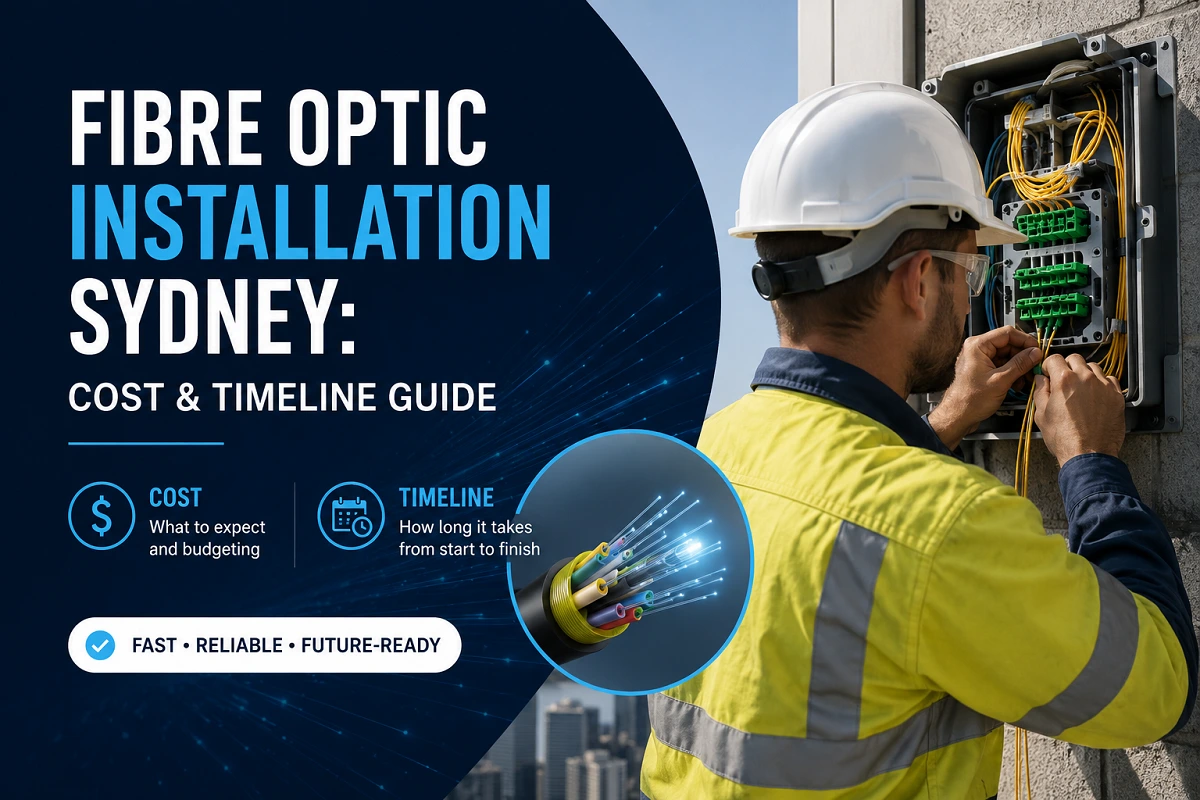
Fibre Optic Installation Sydney: Cost & Timeline Guide
Whether you’re setting up a new office, upgrading an ageing network, or tired of buffering during video calls, fibre optic installation in Sydney raises two common questions. How much will it cost? How long will it take?
These are fair questions. However, there is no one-size-fits-all answer. Your site, existing infrastructure, cable requirements, and installation type can all affect the cost.We install fibre across homes, offices, and commercial properties throughout Sydney. Our team works on a wide range of fibre installation projects. This guide covers the costs and timelines we commonly see.We’ve worked on everything from a single home office data point to full multi-level commercial fit-outs. These projects give us a clear understanding of typical installation requirements across Sydney.
Knowing the expected cost and timeline can make the process easier. You can plan your budget and schedule with greater confidence. Whether you need a small residential upgrade or a complete office network, we’ll help you understand what to expect.
What Affects Fibre Optic Installation Pricing?
Before jumping into numbers, it helps to understand what actually drives the cost of a job up or down. No two properties are quite the same, and pricing reflects that.
- Distance from the connection point: The further the cable needs to run, the more labour and materials the job requires.
- Indoor vs outdoor runs: Underground conduit work costs more than a straightforward internal cable run through a roof space or wall cavity.
- Existing infrastructure: A site with existing conduit or cable pathways is generally cheaper to work with than one needing everything built from scratch.
- Building type and access: Older buildings, multi-storey offices, and sites with limited access can all add time and cost to a job.
- Number of connection points: A single data point costs less than a full office fit-out with multiple points across several rooms or floors.
- Site preparation required: Jobs needing wall penetrations, trenching, or working around existing services take longer and cost more than a straightforward install.
Typical Fibre Optic Installation Cost Ranges
While every quote should reflect your specific site, most jobs fall into a few general categories:
| Job Type | Typical Scope | General Cost Range |
| Single data point installation | One connection point, straightforward run | Lower end of the range |
| Multi-point residential setup | Several rooms wired for fibre or data | Mid-range |
| Small office fibre installation | Multiple points, structured cabling | Mid to higher range |
| Commercial or multi-floor installation | Larger scale, more complex routing | Higher range, quoted individually |
These figures are general guidance only. A proper quote should always be based on a site assessment rather than an average, since access, distance, and existing infrastructure can shift the price significantly in either direction.
How Long Does Fibre Optic Installation Take?
Timelines vary just as much as cost, depending on the scope and complexity of the job.
- Simple residential installations with a single connection point can often be completed within a few hours on the day.
- Multi-point home installations, covering several rooms, typically take a full day, depending on how much cabling needs to run through walls or roof space.
- Small office installations usually take one to two days, particularly if structured cabling is being installed alongside the fibre connection itself.
- Larger commercial or multi-floor jobs can take several days to a week or more, especially where cabling needs to run between floors or through shared building infrastructure.
- Jobs requiring underground conduit generally take longer than internal runs, since trenching and reinstatement work adds extra time to the schedule.
Factors That Can Extend Your Installation Timeline
A few things commonly push a job beyond its original estimate, and it’s worth knowing about them upfront:
- Building access restrictions, particularly in strata or commercial buildings requiring booking slots or after-hours work.
- Unexpected site conditions, such as asbestos-containing materials in older properties, which need to be managed before cabling work can proceed.
- Provider-side delays, where the physical cabling is ready but activation depends on a third-party provider’s scheduling.
- Design changes mid-project, such as adding extra connection points once work has already started.
- Weather delays, for any part of the job involving outdoor or underground work.
Step-by-Step: What Happens During Installation
Understanding the process helps set realistic expectations for both cost and timeline.
- Site assessment. A technician reviews the property, confirms cable routes, and identifies any access or infrastructure issues before quoting.
- Planning the cable path. This includes deciding between internal runs, roof space, wall cavities, or underground conduit depending on the site.
- Running the cable. The physical fibre is installed along the planned route, connecting the entry point to each required location.
- Installing data points. Wall sockets or data points are fitted at each connection location.
- Testing and certification. Every connection is tested for signal integrity and speed before the job is signed off.
- Activation. Depending on the setup, this may involve coordinating with your internet provider to activate the service on the newly installed line.
Fibre Optic Installation vs Standard Network Cabling
It’s worth understanding how fibre optic installation differs from general network cabling, since the two get mixed up more often than you’d think.
Fibre optic cabling uses light signals through glass or plastic fibres, offering higher bandwidth and longer maximum run distances than standard copper cabling, which makes it the better fit for larger sites or anywhere data needs to travel a fair way without losing speed. Copper cabling still does the job well for shorter runs and smaller setups, and it’s generally the cheaper option upfront. For a deeper look at how these compare directly, our guide on network cabling installation cost breaks down pricing for copper-based setups specifically, which is worth a read if you’re still weighing up the two.
Choosing the Right Fibre Cable for Your Project
Not all fibre is the same, and picking the right type affects both performance and cost down the track. Single-mode and multi-mode fibre each suit different jobs, and getting this wrong can mean paying for more capability than you actually need, or worse, not enough. Our detailed breakdown on considerations when choosing fibre optic cable covers single-mode versus multi-mode options and other technical factors worth understanding before your installation gets underway.
Why Proper Planning Pays Off
A well-planned project almost always ends up cheaper and faster than one that’s rushed or under-scoped from the start. We regularly see jobs where a client initially wanted just one or two connection points, only to realise partway through that they needed several more, once desks were rearranged or a second office was added.
Planning ahead for likely future needs, even if it means installing a couple of extra data points now, is almost always cheaper than running a second cabling project later. Reopening walls, re-routing cable paths, or scheduling a second visit adds cost that a bit of upfront planning could have avoided entirely.
Common Mistakes That Drive Up Cost or Delay Timelines
- Skipping a proper site assessment, leading to inaccurate quotes and unexpected costs once work begins.
- Not planning for future needs, resulting in a second installation project down the track instead of building in extra capacity from the start.
- Choosing the cheapest quote without checking scope, which often means comparing a basic job against a comprehensive one.
- Overlooking building access requirements, particularly in commercial or strata properties with strict booking processes.
- DIY attempts on complex runs, which can lead to poor termination, signal loss, or the need for a professional to redo the work anyway.
We’ve covered several of these in more depth in our article on common fibre optic installation mistakes to avoid, which is worth a read before booking any installation.
Fibre Optic Installation Across Different Property Types
Cost and complexity also shift depending on the type of property involved, which is worth factoring in when budgeting for a job.
- Standalone houses generally offer the most straightforward installations, with roof space and wall cavities providing easy cable pathways.
- Apartments and strata properties often require body corporate approval before work begins, which can add time to the process even before installation starts.
- Older heritage-listed buildings may have restrictions on wall penetrations or visible cabling, requiring more careful, and sometimes costlier, routing solutions.
- Purpose-built commercial offices typically have more accessible infrastructure, such as existing cable trays or risers, which can speed up installation.
- Retail and hospitality fit-outs often need cabling coordinated around shopfitting timelines, so scheduling becomes as important as the technical work itself.
Knowing which category your property falls into helps set realistic expectations before you even request a quote.
How to Get an Accurate Quote
Getting a reliable quote in Sydney comes down to giving the installer enough information upfront:
- Know your connection points. Roughly map out how many locations need a fibre connection before requesting quotes.
- Mention any access restrictions. Strata approvals, after-hours access, or heritage building constraints should be flagged early.
- Ask what’s included. Confirm whether testing, certification, and data point installation are included in the quoted price.
- Compare like-for-like scope. A cheaper quote covering fewer connection points isn’t actually cheaper once scope is matched properly.
- Ask about timeline realistically. A provider who can’t give a rough timeframe upfront may not have a clear process for managing the job.
Fibre Optic Installation for NBN vs Business Networks
It’s worth noting that these projects generally fall into two different categories: connecting a property to the NBN via fibre, and installing internal fibre or structured cabling for a business network. These involve quite different scopes of work, and the pricing structures differ accordingly, so it pays to know which one you’re actually after before requesting quotes. If you’re specifically looking at NBN connection costs rather than internal business cabling, our guide on how much it costs to get NBN installed covers that side of things in more detail.
Frequently Asked Questions
1). How long does fibre optic installation take?
Most residential jobs take a few hours to a full day, while larger commercial installations can run to several days depending on scope.
2). How long does NBN installation take?
A standard NBN installation is usually completed within two to four hours, though it can take longer if extra cabling work is needed.
3). How much does it cost to get NBN fibre to the house?
Costs typically range from a few hundred to a couple of thousand dollars, depending on distance from the street and how much additional cabling your home needs.
4). What are the steps involved in the FTTP installation process?
It generally goes: site assessment, running the fibre lead-in to the house, installing the NBN connection box, then testing and activating the service.
5). Do I need underground conduit to run new fibre cabling?
Only if the cable needs to reach a detached structure or cross open ground. Many residential and office installations use internal pathways like roof space or wall cavities instead.
6). What’s typically included in the quote?
Most quotes cover the cable run, data point installation, and testing and certification, though it’s always worth confirming this upfront since inclusions can vary between providers.
Final Thoughts
There’s no single figure that answers “how much does fibre optic installation cost” or “how long will it take”, because both genuinely depend on your property, your existing infrastructure, and the scope of work involved. What matters most is getting a proper site assessment before committing to a quote, rather than comparing numbers that might not reflect the same scope of work.
Whether you’re wiring a single home office or planning a full commercial fit-out, understanding what drives cost and timeline upfront means fewer surprises once the job is underway. A bit of planning at the quoting stage saves both time and money once the technicians are actually on-site, and it’s the difference between a smooth fibre optic installation job and one that drags on with unexpected extras.
If you’re ready to get an accurate cost and timeline for your specific property, the team at Data Cabling Guy can assess your site and provide a clear, honest quote, without vague pricing or unnecessary extras.